To call out a disease as the emperor (literally in Latin the military commander) of all maladies is perhaps one of the boldest statements that a physician can make. With hosts of specialists and “-ologists” all contending that their ailment of study is the most detrimental to humanity and worthy of funneling tax dollars into research and development, it seems dubious at best that any one should be ascribed such a lofty title. Nevertheless, in The Emperor of all Maladies, Dr. Siddhartha Mukherjee makes the claim that cancer is this emperor, and I believe that he is justified in his declaration.
I read Emperor almost a year ago to date over the course of a Caribbean cruise and Florida beach trip (hardly a sandy beach read, I admit). As an aspiring medical professional, I have fallen in love with the medical nonfiction genre, properly executed, and Mukherjee’s work does not disappoint. In it, he follows the history of this insidious disorder all the way back to its first historical appearance 4,600 years ago in Egypt. He seamlessly weaves together history, philosophy, literature and science into what Mukherjee inventively calls “a biography of cancer”. This inventive approach, as well as the clarity and captivating nature of his writing, landed the book the 2011 Pulitzer Prize.
The history of cancer is certainly fascinating, and it follows the general history of medicine as we know it. One quickly discovers that, despite what conventional wisdom may suggest, cancer is a disease as old as any other. With the relatively recent eradication of most infectious diseases from the world, individuals are finally living long enough to die of the cancer that statistically emerges in the latter third of a human’s life. Mukherjee chronicles the initial confusion that physicians had with cancer, believing it to be a new disease that must be treated as such.
Mukherjee highlights the three courses of action in treating cancer – surgery, radiation, and chemotherapy – from their inception to their modern manifestations. Of note are his descriptions of William Halsted’s early surgical attempts to remove breast cancer “at the root.” He introduces for the reader the idea of a “radical mastectomy”, as the literal Latin translation of the word suggests. These passages on mastectomy are horrifying, and they showcase how far short the hubris of these surgeons often fell from the reality of a disease they knew practically nothing about. Mukherjee also follows the story of Sidney Farber in the first successful use of chemotherapy against leukemia, where Farber aggressively pursues leukemia into remission with his drugs. However, in his pursuit Farber pushes children beyond their physical limits and the lines between patient care and personal victory for Farber blur considerably.
There is much forgotten history in the pages of this book – encompassing everything from the opening of the nation’s first children’s hospitals, the dark side of America’s cigarette lobbying industry, the stigmatizing initial response to sexually transmitted cancers like HPV, to national cancer policies influencing the outcome of American presidential elections. Along the way, you will discover that cancer has had far more of an impact than simply being the second leading cause of death globally. It is a constant present lurking in the background of our psyche, threatening to posses 1 in 3 of us and kill 1 in 6. Like a mold or mildew, it inhabits some dark and deserted corner of our bodies, undetected, and spreads out to consume us whole after it is far too late for eradication.
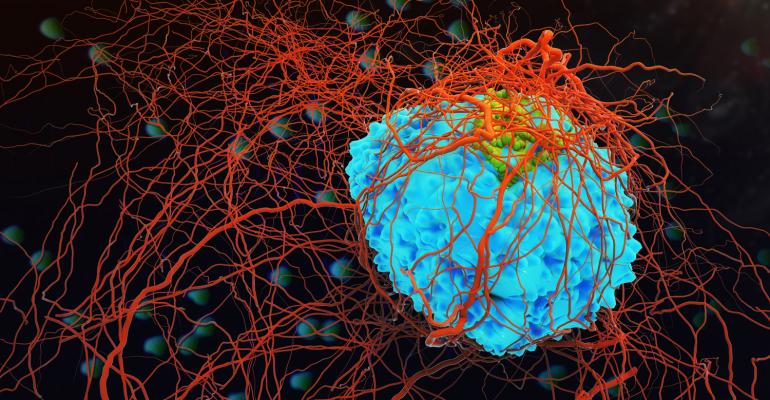
Emperor of all Maladies tells the story of the heroes and villains, cowards and dreamers, visionaries and short-sighted individuals who dared to grapple with this frightening reality. In a stroke of genius, Mukherjee titles my favorite chapter of his book “A Distorted Version of Our Normal Selves.” This is such an apt and perfect description of cancer to me. Cancer is not one disease, and in many ways, it is not a disease at all. It is not a pathogen, a foreign bacteria or virus that bypasses our immune system to attack and weaken us. It is a collection of chance genetic mutations in our very own DNA that surpasses our own ability to correct. It is an out-of-control genetic mutation causing the unchecked replication of our cells that eventually depletes all our energy stores. Every single cell, tissue, organ and organ system in our body is a liable culprit – at any stage in our lives from birth to death. Humans have nearly mastered self-defense against foreign invaders of all kinds but are practically defenseless when the very thing trying to kill us is ourselves.
There is much talk these days about how amazing it is that we have doubled our lifespan in this past century – and the potential that we could do the same in the next. Speculation has it that we could even become amortal, given the current pace of science and technology. Emperor introduces us to the most significant hurtle in this quest. Cancer is a sort of human expiration date, perhaps even a limit on our existence placed by God lest we try and fly too close to the sun. The irony of it all is that we are both the origin and the source of our own destruction, and that to kill the cancer, we must also kill ourselves. As Mukherjee beautifully relates, “cancer’s life is a recapitulation of the body’s life, its existence a pathological mirror of our own. To confront cancer is to encounter a parallel species, one perhaps more adapted to survival than even we are.” Regardless of your medical or scientific literacy, this book is a must read for any reader who wants to confront the great enemy of our time, the emperor of all maladies.
Written by Cal Wilkerson