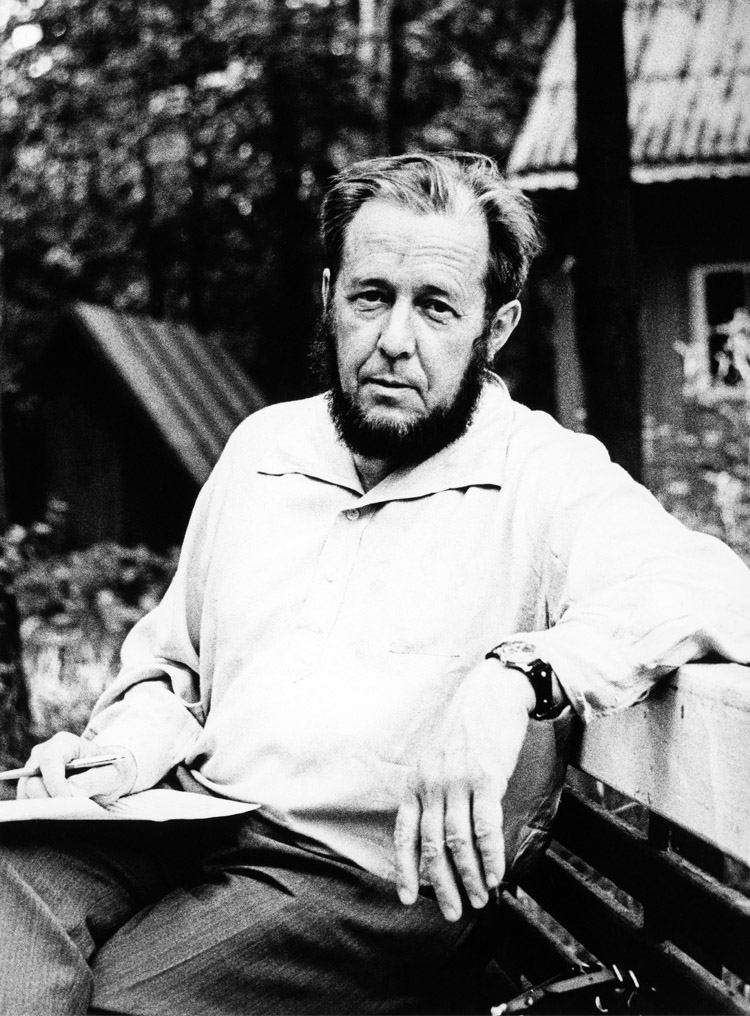
I started the new decade by finishing The Gulag Archipelago: An Experiment in Literary Investigation (Abridged). It was written originally in three volumes and later the authorized abridged version came out in 1985. Aleksandr Solzhenitsyn served as a captain for the Soviet Army during WWII but endured eight years of imprisonment for his critical letters of Stalin and the government of Russia. In this book he addresses decades of the Soviet prison system and oppression. This book is much more than a simple memoir but more of a commentary and dissection of the Soviet machine. The West either turned a blind eye or due to complicated relations with Russia post-WWII ignored the death toll racked up by the Soviets against their own people. We needed this book to shed light on the terrible conditions that many marginalized groups suffered under during that time and even today. Our collective memory certainly understands the atrocities committed by the Nazis in concentration camps but the Soviet prison system became a well fed death machine for decades after WWII. Solzhenitsyn emerges from the prison system as an oracle to proclaim and preach the dangers of socialism performed by the Soviets.
In The Gulag Archipelago, Solzhenitsyn approaches the crisis systematically. He breaks the book down into seven parts, all of which cover different aspects of the prison system in the country. To begin, he writes about how many people including himself thought that life in a prison camp/work camp would never happen to them. In 1945 his fate was sealed by letters to a friend from school that criticized Stalin. Solzhenitsyn faithfully served the Soviet Army as captain and overnight became an enemy of the state. One of the primary arguments in the book is that Lenin, not Stalin, set the precedent for the creation of the Gulag camps. There were quotas set for arrests, interrogations were barbaric and prison camps were scenes from our darkest nightmares. Solzhenitsyn writes of those in charge of the prisons and arrests, “To do evil a human being must first of all believe that he’s doing good, or else that it’s a well-considered act in conformity with natural law. Fortunately, it is the nature of the human being to seek justification for his actions.” One of his fears is ideology itself, “Ideology- that is what gives evildoing its long-sought justification and gives the evildoer the necessary steadfastness and determination.”
He compares the Nuremberg Trials after WWII as a seeming triumph in the fight between good and evil but the fact that there has not been a single trial for the larger death toll in Russia under the system he suffered under. He writes of the oppressors, “First we submissively allowed them to massacre us by the millions, and then with devoted concern we tended the murderers in their prosperous old age.” This attitude has ramifications towards the future of mankind in his opinion, “In keeping silent about evil, in burying it so deep within us that no sign of it appears on the surface, we are implanting it, and it will rise up a thousandfold in the future.”
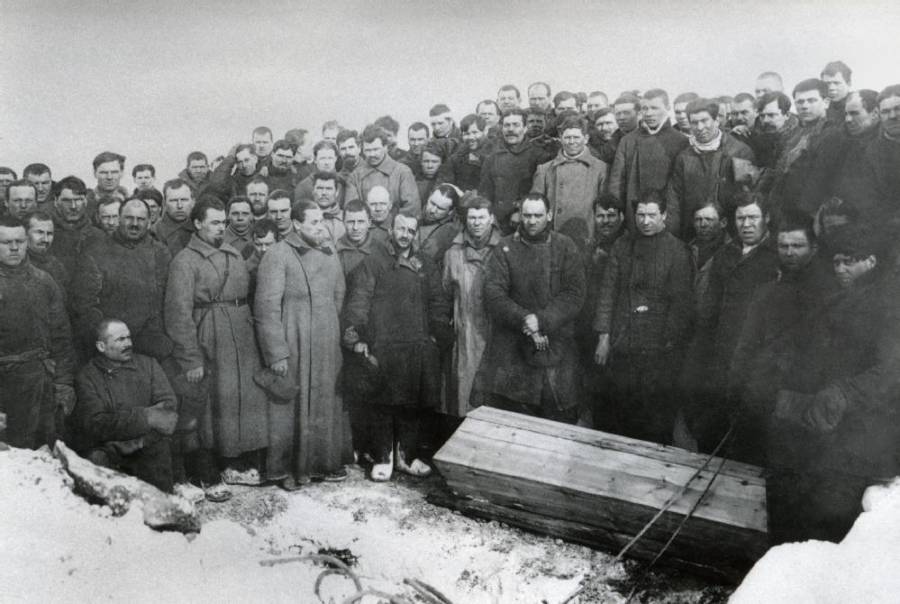
His attitude towards WWII also comes up throughout the book. The West made a point to defend itself in western Europe and in that process left eastern Europe under slavery by the Soviets. Solzhenitsyn shows the evolution of Soviet ideas all the way to the Solovetsky Islands. The Solovetsky Islands are an isolated chain of islands in northern Russia in what is considered the Gulag Archipelago. He wrote of it, “You couldn’t be heard from there no matter how loud you shouted, and you could even burn yourself up for all anyone would know.” Similar images of people suffering in cattle cars in route to certain death, the feeling of utter despair of the prison ships set their destinations to the Gulag are portrayed in awful fashion in this work. Not to mention that the Solovetsky Islands were home to peaceful monks that were thrown off this once “holy soil”.
A major driving force and growth factor of the prison camps was the need for free labor to supply Russia without weakening it economically. He writes about it clearly, “The economic need manifested itself, as always, openly and greedily; for the state which had decided to strengthen itself in a very short period of time and which did not require anything from outside.” In the camps, the workdays were set at seven hours in the winter and 12 hours in the summer. The barracks themselves were nothing more than tents on the ground (throughout summer and winter). Of course rations were inadequate and scurvy was rampant among prisoners. He comments on hunger and how it changes a person in the camps, “Hunger rules every human being, unless he has himself consciously to die. Hunger, which forces an honest person to reach out and steal (when the belly rumbles, conscience flees).”
Aleksandr Solzhenitsyn views the Soviet prison system as self induced suffering by the country for creating the Soviet Union. He writes, “Thus it is that the Archipelago takes its vengeance on the Soviet Union for its creation. Thus it is that no cruelty whatsoever passes without impact. Thus it is that we always pay dearly for chasing after what is cheap.” It was the poor and marginalized that were forced to be the backbone of the Soviet Union. He makes note that the Zeks (forced inmates of labor camps) built many of the housing, schools, hospitals and other projects for decades.
Towards the end of the book, Solzhenitsyn brings up some of his own philosophy that he developed after self-reflection in the camps, “Looking back, I saw that for my whole conscious life I had not understood either myself or my strivings. What had seemed for so long to be beneficial now turned out in actuality to be fatal, and I had been striving to go in the opposite direction to that which was truly necessary to me.” The concept of evil and it’s relationship with humans is also a topic he explains well, “Since then I have come to understand the truth of all the religions of the world: They struggle with the evil inside a human being (inside every human being.) It is impossible to expel evil from the world in its entirety, but it is possible to constrict it within each person.” The struggle inside the camp for many was keeping their own humanity somewhat intact if they even survived. He makes a point that everyone in the system was constantly exposed to making ethical decisions that would directly impact them long term, “In camp, existence did not determine consciousness, but just the opposite: consciousness and steadfast faith in the human essence decided whether you became an animal or remained a human being.”
There is a lot more in this book that I simply cannot address but I would encourage all to look at this masterpiece and spend sometime with Aleksandr Solzhenitsyn. Although The Gulag Archipelago is a tough book to stomach it deserves the attention of the modern reader because it shows the fruits of ideology if taken to its’ full extent. Solzhenitsyn did not escape unscathed from this himself, “It was granted to me to carry away from my prison years on my bent back, which nearly broke beneath its load, this essential experience: how a human being becomes evil and how good. In the intoxication of youthful successes I had felt myself to be infallible, and I was therefore cruel. In the surfeit of power I was a murderer, and an oppressor. In my most evil moments I was convinced that I was doing good, and I was well supplied with systematic arguments. And it was only when I lay there on a rotting prison straw that I sensed within myself the first stirrings of good. Gradually it was disclosed to me that the line separating good and evil passes not through states… but right through every human heart. This line shifts. Inside us, it oscillates with the years. And even in the best of all hearts, there remains… an unuprooted small corner of evil.” Through his experience he leaves us all with a deep concept to consider as we grow old in life and ourselves experience that shifting line within our own hearts. This book is in a class of its’ own and should be read that way.
Written by Michael McPhail
 Brains and Brawn