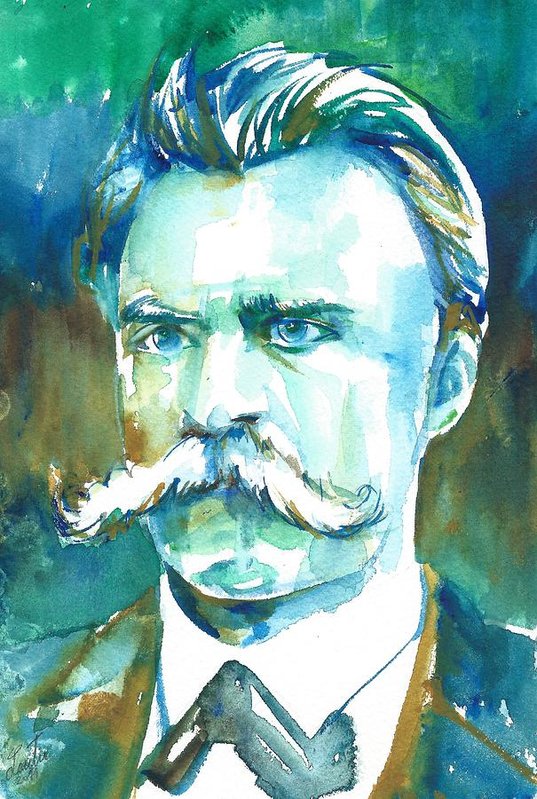
Friedrich Nietzsche towers infamously in our collective memories for stating that, “God is dead.” The quote is largely taken out of context by most nonetheless there is an air of reservation for many to approach this great philosopher with that stigma attached to his work(s). At the beginning of the 2019, I was given a copy of Thus Spoke Zarathustra as a gift and a challenge from Cal. As I read Nietzsche, it was like going deep into a cave. There were times of confusion, anxiety and an overwhelming sense of being out of my comfort zone. I also felt a deep connection to Zarathustra’s teachings and inspiration to undertake challenges. Like we’ve stated before, the books you read come at a cost but Thus Spoke Zarathustra by Friedrich Nietzche deserves a place in your library despite the challenges it will bring.
Zarathustra is a shaman that comes down from solitude high from a mountain to teach mankind to the state of “overman”, which is humanism/self-reliance in its’ refined form. The book is split up into four parts filled with speeches as Zarathustra progresses on his journey to teach mankind. Essentially, Zarathustra is a wandering prophet proclaiming that this life has meaning not the afterlife. Part one of the book was by far my favorite. It is filled with sections like: On War and Warriors, On the Thousand and One Goals, On Love of the Neighbor and many others. You can clearly see Nietzsche’s philosophy echo in these passages. There are many great antidotes on living a more self-reliant and driven life as well scattered throughout the book. He goes onto to say later in part one, “But the worst enemy you can encounter will always be you, yourself; you lie in wait for yourself in caves and woods. You must wish to consume yourself in your own flame: how could you wish to become new unless you had first become ashes!” The book in the beginning flows like The Sermon on the Mount or at least has the same structure in my opinion. The baseline knowledge that I have of Nietzche’s life, I know he suffered greatly. It is evident in his work as well. Zarathustra makes a point of what suffering did to him by the end, “It was suffering and incapacity that created all after-worlds this and that brief madness of bliss which is experienced only by those who suffer most deeply… Behind your thoughts and feelings, my brother, there stands a mighty ruler, an unknown sage whose name is self. In your body he dwells; he is your body.” Perhaps Zarathustra is a bit mystic but I found myself drawn to the teachings of pushing yourself, finding meaning through suffering and being self-reliant when called upon and challenged.
Part two of the Thus Spoke Zarathustra continues similar to part one with the wandering evangelist preaching to whoever will listen. Nietzsche addresses creation and the creator in a great quote, “Creation- that is the great redemption from suffering, and life’s growing light. But that the creator may be, suffering is needed and much change. Indeed, there must be much bitter dying in your life, you creators. To be the child who is newly born, the creator must also want to be the mother who gives birth and the pangs of the birth-giver.” Such a true statement about the creative process, the pain, the struggle and the final beautiful product. We experience with the death of those close to us: beautiful writings, speeches and songs often flow from the abyss of suffering. It will only continue to be a fact of life as we grow. Thoughts of religion flow from this particular part of the book as well, “Thus spoke the devil to me once: ‘God too has his hell: that is his love of man.’ And most recently I heard him say this: ‘God is dead; God died of his pity for man.” A bit morbid as quotes go but powerful nonetheless, you can feel Zarathustra’s pulpit shake as he implores mankind to listen. One of the more fascinating sections of the second part is On the Tarantulas. It is such an interesting and applicable chapter for modern society, “Revenge sits on your soul: wherever you bite, black scabs grow; your poison makes the soul whirl with revenge. Thus I speak to you in a parable- you who make souls whirl, you preachers of equality. To me you are the tarantulas, and secretly vengeful. But I shall bring your secrets to light…” You wonder if we have any tarantulas crawling amongst us in today’s world? After further reflection, there is a lot of great topics set forth in part two. Zarathustra reflects on the passage of time, “O you visions and apparitions of my youth! O all you glances of love, you divine moments! How quickly you died. Today I recall you like dead friends. From you, my dearest friends among the dead, a sweet scent comes to me, loosening heart and tears.” What a sad, beautiful statement he makes. We all deal with this painful experience of the passage of time on some level whether we like it or not.
Part three and four descend further perhaps as Nietzsche descended towards the end of his life since this book was split up and published in different manuscripts. There is still so many great ideas put forth. I didn’t expect to enjoy Thus Spoke Zarathustra as much as I did. There is never going to be a stop to pursuing being a better man, “Indeed, to look down upon myself and even upon my stars, that alone I should call my peak; that has remained for me as my ultimate peak.” Zarathustra challenges us all to push the limits and to be brave, “Courage is the best slayer: courage slays even pity. But pity is the deepest abyss: as deeply as man sees into life, he also sees into suffering.” There’s plenty to reflect on based on the quotes I have laid out but to wrap it all up there is a spot on warning to all of us, “Sex, the lust to rule, selfishness: these three have so far been best cursed and worst reputed and lied about: these three I will weigh humanly well.”
Friedrich Nietzsche deserves your attention, handle his work with care but it certainly has a place in every man’s library. His call to action, self-reliance and realism is much needed in our lives. Thus Spoke Zarathustra is challenging but rewarding endeavor. It took me a long time to chew through it, I have discovered a deep appreciation and reverence for the great philosophers. Perhaps, like Icarus, Nietzsche flew too close to the sun searching for answers but gave us all an absolute masterpiece in the process. Don’t be afraid of the intimidating mustache or the stoic look of his portraits give him a real chance and you will not regret it.
Written by Michael McPhail
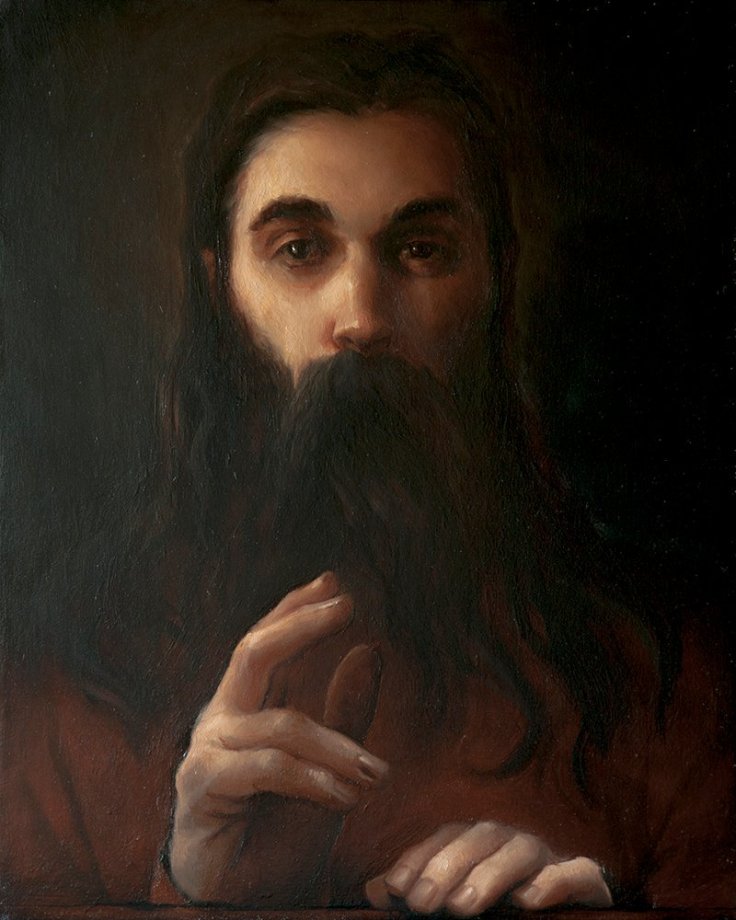
Painting of Zarathustra
 Brains and Brawn