
The difference in religiosity and a religion—or, put in modern vernacular, the difference in spirituality and religion—seems to be a trivial distinction if not an outright tautological distinction. Religiosity (or, in the pervading modern mindset, “spirituality”) seems to be something akin to the adjective usage of the word “religion.” Now, a certain stereotype comes with the word “spirituality,” as images of New Age movements come to light. I am not trying to argue the merit for or against New Age thinkers. I am simply acknowledging the stereotype that exists in the modern mindset about what spirituality is, and how it relates to religion. Mainly, that it does not. “Spirituality” is portrayed as religiosity unhinged from any organized religion. Any delineation that exists between “spirituality” and “religiosity,” and I am sure that there are quite a few, will be forgone in my post here, as I am simply trying to establish a difference in the adjective and noun forms of “religion.” For the intents of this post, “spirituality” and “religiosity” will both simply be defined as the “adjective form of ‘religion’.”
Why does this distinction deserve so much exposition? The answer to this question is put quite concisely in a book I believe that everyone who belongs to an organized religion should read—Waking Up: A Guide to Spirituality Without Religion. This work was composed by writer, philosopher, neuroscientist, podcast host, and one of the “four horsemen of atheism” Doctor Sam Harris. Now, I realize that this work and its author seem a bit out of place on this blog, but I believe this book is one that will benefit everyone to read. Furthermore, it is delivered by an incredible modern mind who has lived a life in search of truth in religious, philosophical, and scientific spheres.
When reading Waking Up, I urge the reader to remember that every treatise from Aristotle to modern philosophy of mind books—which I consider Waking Up to be one of—is only one person’s understanding of a subject. Ask any good teacher, and they will tell you that to truly understand a subject, you need multiple teachers to account for the parallax. To paraphrase a famous Zen saying, “Do not confuse the finger pointing at the moon for the moon.” In the context of this post, do not confuse one person’s take on a subject—comprehensive and thought-provoking as it may be—to be the absolute and objective truth of the subject. Furthermore, when dealing with subjects like the nature of consciousness or any metaphysical or epistemological subject, you are reading revelation by someone of something. In other words, this is how they have understood something bordering, or quite possibly fully encompassed, the un-understandable. I believe my lengthy prelude should be taken into account because this nebulous minefield of a book provides invaluable and compelling arguments for quite a few of these far-reaching topics from one of the foremost minds of the day. Spirituality, the nature of consciousness, ontological anthropology, and general ethics are all addressed in this book, though Harris’s view on ethics is more extensively covered in some of his other works like The Moral Landscape and Letters to a Christian Nation.
One of Harris’s central themes, not just in this book but in his philosophy in general, is that a successful system of ethics can be erected outside of dogma. Furthermore, dogma creates a myriad of problems in the co-existence of sentient creatures and is an outright detriment to his consciousness-based ethical system. This system postulates that the only ground that a system of ethics can be reasonably derived from is from recognizing suffering in sentient life. The cessation of suffering in sentient life is deemed “good,” and the prevalence of suffering in sentient life is deemed “bad.” If this sound Buddhist, it is because it is. Harris spent many years under the tutelage of various master both in the Hindu and Buddhist traditions, advocating Dzogchen, specifically, in grounding his consciousness-based ethics in Waking Up. Within Waking Up, Harris also divulges some of these incredible stories from his life, leaving college at Stanford to pursue his quest for knowledge in the East. After years of search, he came back to the United States and finished his training at Stanford before going to UCLA for his Ph.D. in cognitive neuroscience.
How does one of the four horseman of atheism advocate for an ethics system using Buddhist thought to justify it? Is Buddhism not one of the major world religions? Well, I believe he does so by making the distinction I made at the start of this post. He does so by drawing on something that Buddhism has remembered and that Christianity has forgotten: religions are not “religions.” Using the noun form of religion, as Wilfred Cantwell Smith has pointed out, is inadequate. Likewise, thinking of any “religion” in the noun form is inadequate. Once a “religion” is objectified and made into a thing, it becomes finite and begins to stagnate. Just like life (which many religions try to reflect and emulate), once you define it, is it still the same? No, because the infinite cannot be understood in finite terms, only pointed to. For a tradition to be truly alive, it must remain like life—undefinable and unlabeled to a degree. Though we are humans—concept creating animals—taking our need to define to the extreme results in the very thing I believe Harris is criticizing: the over-formalization and organization of transmitting meaning that hinders the purpose of that meaning.
Now, I made a bit of an over-generalization previously. All denominations and people in the Christian tradition do not make the error in perception that Harris is preaching about, nor are all streams of Buddhism exempt from making this error—which is something Harris points out, himself, in his book. Although, I shall play devil’s advocate once more and point out that Christianity is a “Systematic Theology” and Buddhism would not be labeled a “religion” (a term that had to be created in most of the native languages of Buddhists) if not for Western scholars imposing this concept of “a religion” upon them.
I apologize for not doing a proper book review on this post, but I believe my arguing why this book should be read as opposed to its specific content is more important. This why is to point out the importance of the life of a religious tradition.
I remember my Hebrew professor in college told us a story once about his father questioning him about the content of the Bible. Then training to become a Lutheran pastor, my professor was questioned about what was in the Bible. Upon every answer he gave to his father, the parental response was the same, “No, no, no…what is in it?” Anyone can memorize and rattle off a series of scriptural quotes, and it takes just a little more effort to find a message that will apply to quite a few people surrounding one of the stories and quotes in the Bible, but what is in those stories and quotes? How come I can read the same story with the exact same words in it four years apart and have it direct my life and mean entirely different things to me? There is something in the Bible that makes it different from the works of Shakespeare or James Patterson, though all three are literature. You are not just following a narrative and taking away the moral of the story. You can do that, and I fear that quite a few people read the Bible in that exact way—like they are just memorizing a linear plot progression that affords them with a single life lesson per story. But, I believe most can attest that a relationship and active engagement with what is in the Bible yields result after result of different meaning for something in your life. It truly seems like the Bible is alive. This makes sense for the Word of The Living God to, itself, be alive. Why else would large portions of those that believe in the Christian tradition also believe in Luther’s sola scriptura. The thing is alive! The Christian “religion” is the “religion” of life. It is the engagement with life as it truly is, and not the continuous objectification and dogma of the Christian “religion,” that is Christian religiosity and the Christian tradition.
This abject compartmentalization of divine reality instead of engagement within divine reality is what Harris takes to be the bane Christianity. Playing no favorites, Harris does point out the hypocrisy in several Buddhist streams and teachers which preach this very same abject compartmentalization. He ultimately seems much more sympathetic to underlying Buddhist philosophy, as he argues that this mode of thinking (a more Buddhist) is more conducive to a universalized ethics system.
As I mentioned above, Harris’s ethical beliefs are more thoroughly outlined in some of his other works, but I believe that Waking Up would better behoove the modern reader to pick up. In truth, I have been relying on an amalgamation of Harris’s books and podcasts to write this post, so you would not get as comprehensive an overview on the entirety of Doctor Sam Harris’s thoughts in Waking Up. What you would get, if you are a Christian like myself, is an expansion of your worldview on two fronts: the practical and the religious. Practically (and here I mean it in the contemporary Western, scientific view of the world that is prevalent today), one learns a leading neuroscientist’s views on consciousness, sentient life, and components of what makes us human—a truly fascinating scientific book if nothing else. Religiously, one is brought into a world of skepticism, yet it is all constructive. Doubt has been part of the Christian’s diet as long as there have been Christians. Truly, the reason Christianity became a “Systemic Theology” is because there were multitudes of doubters who banned together to engage in the tradition and come up with recitations to encapsulate the truth. A wonderfully noble activity, yet an ominous one. Harris causes us to remember that memorization is never the same as engagement.
Written by guest author Michael Salvatore Politz
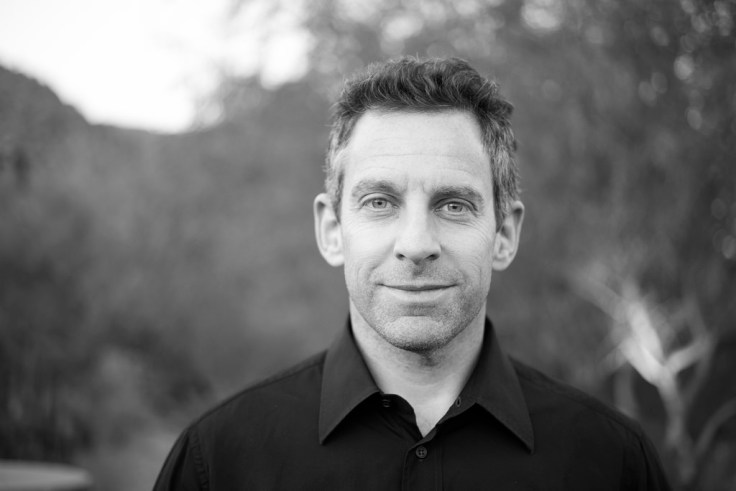
Dr. Sam Harris
 Brains and Brawn
Leave a comment